
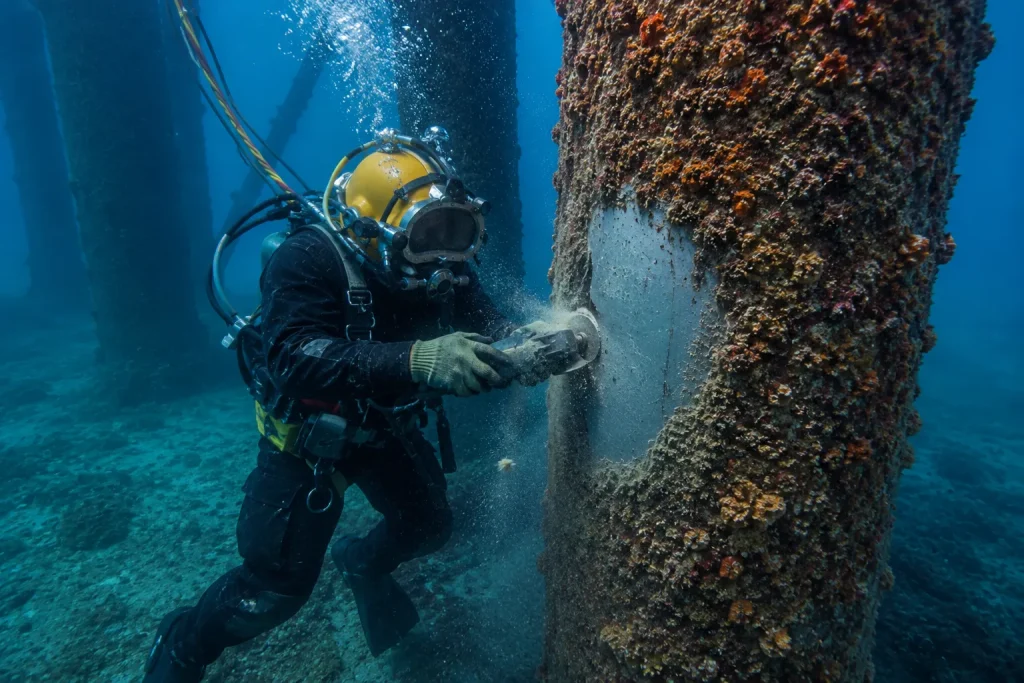
Marine structures operate in some of the harshest environments on Earth. Constant exposure to saltwater, strong currents, marine growth, and corrosion creates ongoing challenges. This is why Underwater Maintenance plays a critical role in preserving infrastructure. Ports, bridges, offshore platforms, pipelines, and seawalls all depend on regular inspections and repairs below the waterline. According to the National Association of Corrosion Engineers, corrosion costs the global economy more than $2.5 trillion annually. A significant portion of that expense affects marine assets.
We have seen many operators extend asset life by decades through proactive maintenance programs. Industry studies show that timely underwater inspections and repairs can reduce major rehabilitation costs by up to 40%. Instead of waiting for visible damage, facility owners increasingly invest in preventive maintenance. This approach improves safety, lowers operating costs, and minimizes unexpected downtime. Understanding how underwater care protects marine infrastructure helps owners make smarter long-term decisions while maximizing the value of their investments.
Why Underwater Maintenance Is Essential for Marine Infrastructure
Protecting Structures from Corrosion and Environmental Damage
Saltwater creates one of the most aggressive corrosion environments. Steel piles, concrete foundations, and underwater supports constantly face deterioration. Without regular intervention, structural strength gradually declines. Underwater Maintenance identifies corrosion early and prevents minor issues from becoming major failures.
Professional diving teams use specialized equipment to inspect submerged components. They measure metal loss, detect cracks, and evaluate coating conditions. Early findings allow targeted repairs before extensive damage occurs. The Federal Highway Administration reports that corrosion-related repairs account for billions of dollars in infrastructure spending every year. Preventive underwater programs significantly reduce those costs.
Marine growth also creates challenges. Barnacles, algae, and mussels increase drag and accelerate material degradation. Routine cleaning removes these organisms and improves structural performance. Combined with protective coatings, cleaning helps preserve critical assets and maintain operational efficiency.
Key Underwater Maintenance Services That Extend Asset Life
Inspection, Cleaning, and Repair Operations
Successful marine asset management begins with comprehensive inspections. Divers conduct visual assessments, ultrasonic testing, and photographic documentation. These evaluations create accurate condition reports that guide maintenance planning.
Several maintenance activities contribute directly to longer service life:
- Underwater structural inspections.
- Marine growth removal.
- Corrosion control treatments.
- Concrete crack repairs.
- Cathodic protection system maintenance.
- Coating and surface restoration.
- Pipeline and cable inspections.
The table below highlights common underwater maintenance services and their benefits. Explore our solutions for Dealing with Visibility, Pressure, and Depth in Marine Construction.
| Service | Primary Purpose | Typical Life Extension Benefit |
|---|---|---|
| Structural Inspection | Identify defects early | Prevents major failures |
| Marine Growth Removal | Reduce biological buildup | Improves efficiency |
| Corrosion Treatment | Protect metal surfaces | Extends service life |
| Concrete Repair | Restore structural integrity | Reduces deterioration |
| Cathodic Protection | Control electrochemical corrosion | Increases durability |
| Coating Maintenance | Maintain protective barriers | Delays replacement needs |
Industry engineers often recommend annual inspections for high-exposure structures. Offshore platforms and busy port facilities may require inspections every six months due to elevated operational demands.
How Preventive Underwater Maintenance Reduces Long-Term Costs
Maximizing Return on Infrastructure Investments
Replacing marine infrastructure requires substantial capital. A single offshore platform repair project can exceed $10 million depending on complexity. Preventive Underwater Maintenance helps avoid these expenses by preserving existing assets.
When maintenance teams address issues early, repair costs remain manageable. Small concrete cracks can often be sealed before water intrusion causes extensive reinforcement corrosion. Similarly, localized steel repairs cost significantly less than replacing entire structural sections.
Asset owners also benefit from reduced downtime. Unexpected failures can interrupt shipping operations, energy production, or transportation services. Planned maintenance schedules minimize disruptions while maintaining operational continuity. Research from marine engineering organizations shows preventive maintenance programs can reduce emergency repair requirements by more than 30%.
Experienced marine engineers consistently emphasize that maintenance budgets represent a fraction of replacement costs. This practical reality makes underwater maintenance one of the most cost-effective infrastructure management strategies available.
Modern Technologies Improving Underwater Maintenance Efficiency
Advanced Tools Deliver Better Results
Technology continues transforming the underwater maintenance industry. Modern inspection methods provide greater accuracy while improving worker safety. Remote-operated vehicles, commonly called ROVs, now support inspections in challenging environments where diver access is limited.
High-definition imaging systems capture detailed structural conditions. Digital mapping software creates precise underwater models that support maintenance planning. Ultrasonic thickness testing measures steel deterioration without requiring material removal. These technologies help engineers make informed decisions based on reliable data.
Recent advancements include:
- Real-time underwater video monitoring.
- 3D structural mapping.
- Drone-assisted surface assessments.
- Advanced corrosion detection systems.
- Digital asset management platforms.
Many ports and offshore operators now integrate inspection data into predictive maintenance programs. These systems identify trends and forecast future repair needs. As a result, maintenance resources are allocated more effectively, extending infrastructure life while controlling costs.
Conclusion
Underwater Maintenance remains one of the most important strategies for protecting marine infrastructure. Regular inspections, cleaning, corrosion control, and targeted repairs prevent small issues from developing into costly structural failures. Marine environments create constant challenges, but proactive maintenance significantly improves durability and performance.
We know that well-maintained structures operate more safely, experience fewer disruptions, and require less emergency intervention. Modern technologies further enhance inspection accuracy and maintenance efficiency. Whether managing a bridge, offshore platform, port facility, or pipeline system, investing in underwater maintenance helps maximize asset value and extend operational life. Long-term infrastructure success depends on consistent care beneath the surface, where critical structural components face their greatest challenges every day.