
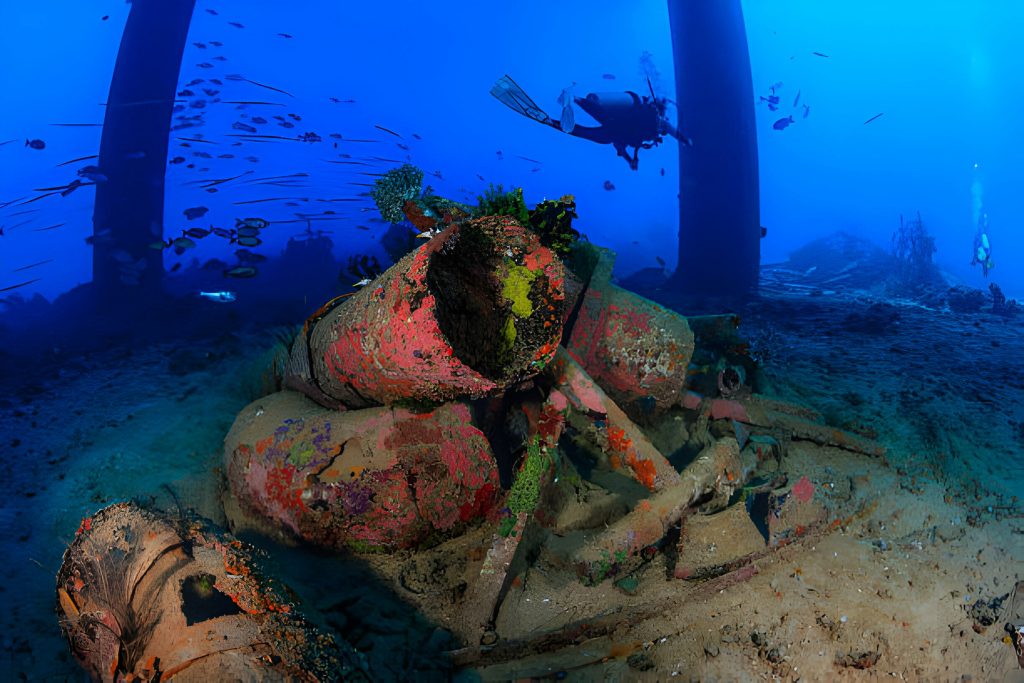
Underwater construction is one of the most challenging and specialized fields in the construction industry, requiring precision, skill, and cutting-edge technology. From building offshore platforms to repairing subsea pipelines, underwater construction projects demand a unique set of tools and equipment capable of handling the complexities of working beneath the surface of oceans, lakes, and rivers. These specialized machines and tools are designed to withstand extreme underwater pressures, visibility challenges, and difficult environmental conditions while ensuring the safety and efficiency of the work being carried out.
Let’s explore the essential equipment and machinery that make underwater construction possible, as well as how these tools contribute to successful projects.
1. Diving Equipment: Enabling Human Access to Underwater Sites
While robotics are becoming more common in underwater construction, human divers remain integral to many projects, especially those that require precise work, detailed inspections, or where robotics cannot perform effectively. Diving equipment plays a crucial role in allowing divers to safely access underwater construction sites.
Key Types of Diving Equipment:
- Scuba Gear: For shallow-water work, divers typically use SCUBA (Self-Contained Underwater Breathing Apparatus) gear. SCUBA tanks, regulators, and masks provide divers with the air supply they need to perform tasks in depths of up to 100 feet.
- Saturation Diving System: For deeper dives, saturation diving is used, where divers live in a pressurized environment in a diving bell or saturation chamber for extended periods. This equipment allows divers to perform deep-water tasks at depths of up to 1,000 feet or more without having to decompress after each dive.
- Diving Helmets: For deeper and more hazardous dives, divers wear helmets with air-supply systems to protect against high pressures and ensure continuous communication with surface personnel.
2. Remotely Operated Vehicles (ROVs): Robotics for Inspection and Manipulation
Remote Operated Vehicles (ROVs) are a vital part of modern underwater construction, enabling operators to perform a wide range of tasks from the safety of the surface. These vehicles are equipped with cameras, sensors, and mechanical arms, allowing them to perform inspections, surveys, and even construction and maintenance work.
ROVs can be operated to:
- Inspect underwater structures: ROVs are equipped with high-definition cameras and sonar to survey and inspect submerged assets, such as pipelines, dams, and offshore rigs.
- Perform construction tasks: Some ROVs come with robotic arms capable of performing welding, cutting, and installation tasks in place of human divers.
- Gather data: Equipped with sonar and laser scanners, ROVs are excellent at mapping the seabed, measuring the distance between structures, and gathering other environmental data.
3. Autonomous Underwater Vehicles (AUVs): Autonomous Data Collection and Exploration
Autonomous Underwater Vehicles (AUVs) have gained popularity in underwater construction due to their ability to operate independently without a tether. These vehicles are ideal for surveying large areas, gathering environmental data, and mapping underwater terrain in remote or dangerous locations.
AUVs are often used for:
- Seabed mapping: Using sonar systems and cameras, AUVs can generate detailed maps of the ocean floor to support construction planning.
- Structural inspections: AUVs can autonomously inspect underwater infrastructure, including submerged bridges, pipelines, and cables.
- Environmental assessments: AUVs can collect environmental data, such as water temperature, salinity, and sediment, to help ensure that construction activities do not negatively impact the marine environment.
4. Submersible Construction Vehicles: Heavy Lifting and Underwater Operations
Submersible construction vehicles are specially designed to operate in deep-water environments, offering construction teams the ability to perform heavy lifting, installation, and maintenance tasks at significant depths. These vehicles can support underwater workers by delivering tools and materials and even assisting in welding and construction operations.
Key Features of Submersible Construction Vehicles:
- Heavy Lifting Capabilities: These vehicles are equipped with powerful cranes and winches to lift and position heavy construction materials and machinery at the construction site.
- Work Platforms: Submersibles often include large platforms to accommodate workers and their equipment, allowing them to perform construction tasks with more ease.
- Precision Tools: Equipped with mechanical arms and other tools, submersible construction vehicles are capable of performing detailed underwater tasks like cutting, welding, and fitting pipes and steel plates.
5. Underwater Welding Equipment: Ensuring Strong, Safe Seals
Underwater welding is a crucial technique in underwater construction, often used for pipeline repairs, underwater infrastructure construction, and even ship hull maintenance. This highly specialized technique requires welding equipment that can function in extreme conditions and produce reliable, strong welds.
Key Types of Underwater Welding Equipment:
- Wet Welding Systems: This technique uses traditional welding equipment, but the process is performed directly in the water. Wet welding is effective for repairing metal structures, including pipelines and oil rigs, but it’s not suitable for all types of welding work.
- Dry Welding Systems: In dry welding, a specialized chamber is used to isolate the work area from the surrounding water. This method allows for better control over the welding process and is typically used for more precise and high-quality welds.
- Electrode and Arc Welding Machines: Underwater welding uses electrodes and arc welding machines that are specifically designed for wet environments, ensuring a stable arc and strong bonds even under high pressure.
6. Pneumatic Tools: Powering Underwater Construction Tasks
Pneumatic tools are powered by compressed air, making them ideal for underwater construction tasks. These tools are used for cutting, grinding, drilling, and shaping materials in environments where electrical power is unavailable or dangerous to use.
Common Pneumatic Tools in Underwater Construction:
- Pneumatic Drills: For drilling holes into metal or concrete structures, pneumatic drills are frequently used in underwater construction due to their reliability and durability.
- Hydraulic Jacks and Pumps: These tools are essential for lifting and moving heavy materials or parts at underwater construction sites.
- Underwater Grinders and Sanders: These are used for smoothing rough surfaces or grinding down materials like concrete, steel, and other hard materials.
7. Hydraulic Systems: Powering Construction and Excavation Tools
Hydraulic systems are essential for underwater construction, providing the power needed to operate machinery such as cranes, excavators, and heavy-duty lifting equipment. Hydraulic tools can handle high pressures and perform demanding tasks like lifting heavy materials or excavating the seabed, making them invaluable for underwater construction projects.
Key Uses of Hydraulic Equipment:
- Excavation: Hydraulic excavators are used to dig into the seabed for foundation work or to clear debris from construction sites.
- Lifting and Moving Materials: Hydraulic systems power lifting equipment, enabling workers to move heavy construction materials and tools underwater.
- Pipe Installation: Hydraulic pipe-laying systems are used for installing and securing pipelines on the seabed.
8. Diving Bell Systems: Ensuring Safe Work Environments for Deep-Sea Divers
Diving bell systems are used to safely transport divers to and from deep-sea construction sites. These bell-shaped structures are pressurized to the same levels as the deep-sea environment, allowing divers to descend and work without experiencing decompression sickness.
Key Features:
- Safety and Comfort: Diving bells provide a safe, dry environment for divers while they are transported to the work site, reducing risks from underwater pressure.
- Communication Systems: These systems allow continuous communication between the divers and the surface crew, which is crucial for coordinating complex construction tasks.
Conclusion: The Backbone of Underwater Construction
Underwater construction projects rely on an array of specialized equipment and technologies that enable construction teams to overcome the challenges of working beneath the surface. From diving equipment to advanced robotic vehicles, these tools and machines ensure the safety, precision, and success of underwater projects. As the demand for underwater infrastructure grows, the continuous evolution of these technologies will further transform the underwater construction industry, making it safer, more efficient, and more sustainable.